Thursday, March 8, 2012

Building A Greener Seattle

We, the current inhabitants of Seattle, Washington are privileged to live in the 3rd top "Greenest" city in the United States (Green, Huff Post - The Internet Newspaper: http://www.huffingtonpost.com/2011/11/04/green-us-cities-list_n_1070107.html#s447934&title=3_Seattle_Washington). Although the people of Seattle have shown great efforts of caring for our recreational parks, cleaning up the environment, and doing small things to make our homes greener and more energy efficient over the past few decades, we could all still do a little bit more as a community to reach number 1 on the list of green cities in the US! The picture below is one of our very own recent developments: The Bullit Center. It is the greenest building in Washington because the entirety of its usage is devoted to energy efficience and spreading urban ecology. The buildings net total of water and energy use amounts to approximately zero (Considering it produces it's own)! It also gets rid of its own sewage and waste which is an astonishing saver of resources compared a plethora of other buildings in our area! (Click on the link below to see in detail the other perks of this Green Center) 

The Buillit Center:
1501 East Madison Street


If we are able to create more of these buildings or even make adjustments to the places we currently live in, Seattle would surely reach the top of the Green cities. Here are a few suggestions for small additions or changes you can make on your home that will create a great impact in our environment:

- Solar Panel roofs
- Using low/non-toxic paints for both exterior and interior walls of your home
- White roofs
- Green roofs (planting a small garden at the top of your apartment or home)
- Collecting/using recycled materials 
- Storing rain water for your laundry/toilet use
- Installing radient floor heating/cooling
- Double-pane windows
- Composting

Wednesday, March 7, 2012

Earth Day


Most people know about Earth Day. However, of those that do, most people don't actually do anything for it. People don't change their habits on that day, they don't help raise awareness for environmental issues, they just sort of ignore it. Let's try to make this year different.

Do you know how Earth Day started?
Wisconsin state senator Gaylord Nelson called to the nation and organized an environmental teach-in on April 22, 1970. Nelson was an environmental activist who was unsatisfied with the top-down approaches to environmental problems that political advisors like Fred Dutton were proposing - he preferred the grassroots effort, in which each community could focus on its own local concerns.


20 million people across thousands of universities and colleges organized protests that day, fighting against everything that was deteriorating the environment. Some of the problems included pesticides, toxic dumps, power plants, air pollution, oil spills, raw sewage, and loss of wilderness.

Some quotes from the organizers:
"We're going to be focusing an enormous amount of public interest on a whole, wide range of environmental events, hopefully in such a manner that it's going to be drawing the interrelationships between them and, getting people to look at the whole thing as one consistent kind of picture, a picture of a society that's rapidly going in the wrong direction that has to be stopped and turned around." [1]
"Earth Day worked because of the spontaneous response at the grassroots level. We had neither the time nor resources to organize 20 million demonstrators and the thousands of schools and local communities that participated. That was the remarkable thing about Earth Day. It organized itself." [2]
So this year, on April 22, try to find that activist inside of you and do something for Earth Day. Sign a petition or donate to a cause, or maybe even just take a shorter shower or turn off your lights for the day. Do something! Every little bit counts!

Monday, March 5, 2012

Canary in the Mine - Urban Thoughts


This is no easy task since lots of time the land is paved and/or manicured so much so that the breadth of biodiversity is narrow and it’s hard to determine how things are affected until it shows up in humans which would mean it’s too late to be prevention. I’ve been thinking about Urban Ecology and how to determine land health in toxic neighborhoods.
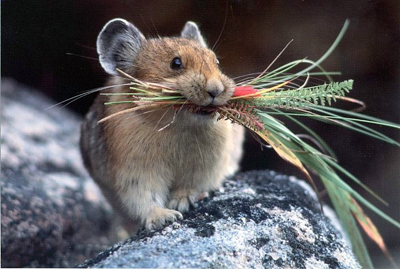
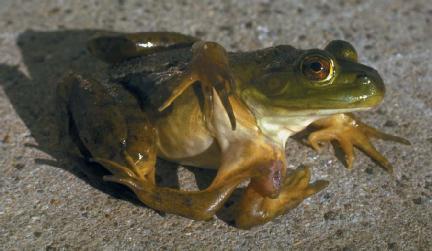
Much like the Cananea (Peña, Mexican Americans and the environment) being at the forefront of using the Canary in the Mine as an early indication of danger. I think we need a Canary type organism for measuring the health of urban land. We know that certain frog and fish can be an indication of dangerous waterways, the canary is a good indication to mine conditions and Pikas are good indications to high altitude environmental changes. If we could figure out an animal that can be introduced to test if an area is toxic or find different types of organisms that can be used as an indication of the health of the land. I’m not sure what kind of organism is appropriate, something with a faster metabolism that humans would be pertinent, and perhaps something that eats other animals so at to biomagnify any toxics. Perhaps there could even be a set of animals, one for air quality and one for soil quality (earthworm?) and one for air quality testing. This line of thinking is more complicated than I thought when started this thesis. I just think that it could be an alternative to expensive and often out of reach tests that can be performed to figure out similar information.

Thursday, March 1, 2012

Keeping it Local


http://www.seattlefarmersmarkets.org/

The above link is to a website that lists all the regular farmer's markets supported by the Neighborhood Farmer's Market Alliance. There are seven, all scattered throughout the greater Seattle area. Most are closed for the season, but the University District and West Seattle Markets are open Saturdays and Sundays, respectively, year-round!


What's the advantage to shopping at a farmer's market?
There are many! First of all, people who sell their goods at farmer's markets are growing it themselves, so you're buying your food directly from the producer! Cutting out the middleman not only minimizes your cost as the consumer, but it decreases the amount of carbon released, because the only transportation the food is going through is just from the farm to the market then from the market to your home!

Second, you know where your food is coming from. Everything at the farmer's market will be locally grown, by certified organic farmers. You can talk to the farmers yourselves and ask them how they practice their farming. Not to mention, by buying locally, the money you pay will go straight back into your community.

Finally, everything you're buying will be fresh, seasonal food! Who wants packaged, processed, and artificially preserved food? I know I don't.

Overall, buying your food from your local farmer's market can only do good things for you and your community. So try stopping by the one nearest you sometime! I bet you'll find something that'll make you want to go back for more.

Here are some more links regarding local farmer's markets:
Farmers Markets - Check out what it says about the Ballard market!
Pike Place Market - Not just a tourist destination
Fremont Market - There's a flea market there too!

Sunday, February 26, 2012

Could car sharing be the future of personal transportation?


Beyond Zipcar: Peer-to-peer car sharing may soon be here

Above is a link to an article that discusses different types of car-sharing options. One is Zipcar, the world's largest car sharing service. How it works is you sign up for the service, reserve a car for when you need it, then pay by the hour whenever you use it. Simple, easy, and way more eco-friendly than owning your own car.

Why is that? People who are members of the Zipcar service obviously don't own their own cars; they only rent out a car when they really need it. This forces people to decide when they really need a car, and when they can get by without it. That means, more often than not, people will choose to walk, bike, bus, or even just carpool to whatever destination they would ordinarily use their own personal car to get to. Every one car that is off the road makes a huge difference.

Zipcar is also a lot cheaper than owning your own car. You don't have to pay for gas, insurance, or any maintenance; all of that is included on your Zipcard! And with the Zipcard, you can reserve any type of car that you want. In Seattle, you even have the option of renting out a hybrid!

Another great thing about the Zipcar service is that it's incredibly convenient. You can reserve your car online or on your mobile phone, and you can even sign up for a text service that alerts you when you are getting near the end of your reservation. If it's available to be rented out for longer, you can simply text back and extend your reservation.

The article above also discusses a new car-sharing option that might soon hit Seattle. With Zipcar, the cars are owned by the service and rented out by whoever is a member. With "peer-to-peer" car sharing, members of the community will put their own personal cars up for a service where other members of the community can rent it out. Zipcar has limited options, but with peer-to-peer car sharing, you can find any type of car at any location, at any time of the day! You look at your options online, find the one that's best for you, then pick it up straight from the owner.

While this may sound sketchy, people have actually begun to show real interest in a program like this being implemented. A service called Getaround has already been established in many areas, and would like to come to Seattle. People who put their cars up for rent are able to choose what price they want to rent their car out for (either $/hour or $/day), and they can actually make a healthy profit out of it. And for those that do put their cars on the line, insurance is included as part of the service, so you don't need to worry about damage to your car.

I personally think that car-sharing is a great idea. Too many people feel the need to get their own cars because they think they need one. But ask yourself - especially those living in a big city - how many times could you really get around without a car? I bet it's more than you realize. With great public transportation, bike trails, and excellent access for pedestrians, it would often be much simpler (and greener) to choose to keep the car in the garage and take the bus, bike, or street. Then if you signed up for a service like Zipcar or Getaround, you would still have the option of getting around with a car when you absolutely needed to.

When I read this article, I immediately looked up Getaround to see if it was something I could reasonably do. I love the idea of sharing my car with people in the community, especially since I'm a college student who doesn't use her car that much and could use some extra cash. I want to do anything I can to help not only the environment, but members of my community. We're all in this together!


Click here to learn more about Zipcar or Getaround.

Thursday, February 23, 2012

Urban Selection: Behavioral change resulting from cities


The urban environment as altered how we interact with each other. We merely need to walk a couple of blocks to migrate from home to work to grocery shopping and etc. Our lives and behavior have been altered. I was having a conversation with a friend the other day about how urban life compares with its suburban counterpart. Our conversation shifted drastically to talking about song birds.

My friend was talking about some article she had read about song birds in urban settings compared with forests. The article was published recently but was referencing a research article published by the Animal Behavior journal. Erwin Nemeth and Henrick Brumm from The Institution of Ornithology in Germany wrote that article summarizing their results that Blackbirds sing higher-pitched songs in cities.

I thought that it was really interesting because everyone talks about how humans have transformed the land and are destroying the habitat for many species. Here, one species has adapted to the concrete jungle.

Nemeth and Brumm measured, using electrical recording equipment, the song frequencies of many birds in the forest and cities. They reported that songs (which were any type of sound used to communicate with other birds) sung in the city had significantly higher frequencies than ones sung in the forest. They say that this might be due to two factors. One is that the birds are trying to overcome the noises produced by the cars and other mechanical equipment used in the city. The birds use these songs to communicate, so they need to differentiate their sounds to attain better “contrast”. The second factor that plays into that is the buildings. Sounds can be heard at great lengths in the forest, but those same sounds have a hard time escaping the dampening effect of concrete.

For those reasons, scientists believe that “urban selection” has permanently altered the behavior of these species.
WWOOOOOOOOOOWW!!!!

Monday, February 20, 2012

Urban Farming, Part III: Urban Ducks & Geese


By Hannah G.

An alternative or addition to raising chickens for eggs (or meat) can be ducks and/or geese if you have the interest and space.  Geese reputedly are intelligent and social, with strong awareness of social cues and memory.  Many of the same benefits of keeping chickens can apply to ducks and geese, such as eating and selling the eggs, educating children (and yourself!) about other organisms and food production, as well as therapeutically grounding yourself to the land and feeling connected and responsible for another living being.

The information below draws from the book, "Keeping Ducks and Geese" by Chris & Mike Ashton (2009).
The Abacot Ranger Duck can be relatively tame and approachable, lay over 200 eggs a year, and will clear slugs from your garden.
---

The first two considerations before taking on ducks or geese is your space and local zoning laws. First, check if your city accepts ducks and/or geese.  If legal, bear in mind that some breeds are noisy and inappropriate for keeping in close proximity to neighbors, so make the right choices. Secondly, ducks and geese need more space than their egg-laying counterpart, chickens.

  • Two average-size ducks need at least 33 square feet of area to roam.
  • Two small geese need a minimum grassy area of 33x66 ft because they need space to graze.

Additionally, waterfowl need water to bathe.  You don't need a literal pond in your backyard, but will need a large enough container of water, which can be cleaned, and will allow the birds to fully submerge their face and eyes and splash around in. (This is how they keep themselves clean.) And -- always make sure the smallest duck or goose can get out of the water container.

Besides a secure fence to protect your waterfowl from predators, geese and ducks need a "secure wooden shed with a good ventilation panel which faces away from prevailing winds and rain" Garden sheds and dog sheds are often satisfactory.

Eggs.
Keep in mind that ducks lay more eggs than geese and each breed varies considerably, so if eggs are your primary goal, find a breed with high laying-potential. Also, different duck breeds produce different sized eggs.
Eggs can provide great nutrition:
"It was once thought that the cholesterol in eggs was bad for human health but the reverse is now thought to be true.  Eggs are a good source of high-quality protein, and egg yolk is one of the best sources of the beneficial nutrients lutein and xenazanthin...Birds fed a free-range diet high in greens also produce healthier eggs for humans to eat.  The egg supplies complete protein and vitamins A, B, and D. Almost half the fat in eggs is healthy monounsaturated, the kind found in olive oil." 
- Keeping Ducks and Geese (Chris & Mike Ashton)
High-Yield Egg Laying Breeds

Ducks - Different breeds (and strains within those breeds) produce widely varying amounts of eggs.
  
The Indian Runner variety (left) can produce over 200 eggs/year given the right strain and has various beautiful color mutations. The Campell (right) can lay up to 300 eggs/year!

Geese - Most breeds produce about 30 eggs a year between February and June.
  
The utility breed of Chinese Geese (left) can produce up to 80 eggs/yr. Roman Geese can lay between 40 and 60 a year and are a good breed "to start with if you have limited space".

Important Note. As cautioned in the previous two urban farming blogs, PLEASE do your research thoroughly before committing to an animal.  This is by no means a guide on keeping ducks and geese -- this is intended to bring attention to urban farming and give you some ideas to consider for your own backyard. Always buy from a reputable breeder -- do not encourage animal abuse.