By Hannah G.
A movement has been growing over the last two decades to keep chickens in urban backyards, and as long as you aren't moving soon, this is a great way to provide nutrition and even supplemental income for your household. Particularly, they are helpful if your closest local food suppliers seem to be mini-marts or fast food -- or if buying organic food overreaches your budget. Just walk into your backyard for your food!

Rhode Island Red chicks
*Please note these are only annotated descriptions -- not verbatim from the book. For more complete information, especially on keeping your chickens healthy and safe from predators, please use a book (such as the one above) or do thorough research on complete, trustworthy internet source(s). The more information you have, the better.
- Fresh Eggs! By producing eggs yourself, you don't even need to go to the grocery store for them and you (and your family) are guaranteed a steady stream of this healthy, protein-rich food source. Additionally, you know they are healthy, organic (providing you use organic feed), and were not trapped in scary, disease-ridden, inhumane cages.
- Great Waste Disposers. As long as you don't over-do it, giving table scraps to your chickens is a great way to get rid of food that may go bad or be thrown out, as well as providing the chickens with a tasty treat.
- Fertilizer. If you own plants, have a garden, or even grow food in your backyard, chicken poop provides a rich, chemical-free fertilizer! Just mix it in with the dirt or create a compost pile for future use.
- Insect Control. Chickens spend a great deal of time foraging for bugs. They can be a great way to keep your garden and plants healthy too. As stated by the above mentioned book, "chickens can work in your garden before, during, and after you plant to keep away pests." What a great (and natural) way to avoid using pesticides or other harsh chemical treatments!
- Education. It is easy to forget where food originates. Chickens are an interesting (and relatively easy) way to see your food's production first-hand. This is particularly helpful for showing children. They can also learn hands-on, interactive responsibility where direct results follow (the eggs)! Not to mention having them involved in the chicken-care helps spread the responsibility equally among the household, helping them feel involved and a positive, integral part of the home's welfare.
- Entertainment. Don't forget the fun part! Chickens are interactive and some are particularly friendly and will even sit on your lap and let you pet them -- especially when raised from chicks. For many of us, animals can have a therapeutic influence, provide healing and companionship. Working with chickens can help one feel more connected and grounded with the environment and the earth, and even help relieve stress and tension from work, relationships, and our outside lives.
Keeping your chickens safe: Don't underestimate the power and perseverance of predators. Invest in the one-time cost of building (or buying) a strong chicken house or coop. Consult some of the resources listed in this blog or other sites and books. (Try your local library.) Those already keeping chickens such as feed-store providers or other people in your neighborhood are often good sources.

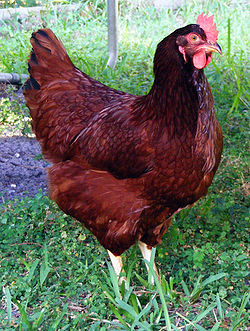
The Plymouth Rock (left) and Rhode Island Red (right) breeds are
described as particularly good for new urban chicken owners. Make sure
you get the appropriate breed for your climate and lifestyle.
Learn more
at the following sites:
Urban ChickensBackYard Chickens
Urban Chickens Network

No comments:
Post a Comment